Graciosa: living with and thanks to geology
🌋 Graciosa - Between constraints and resources
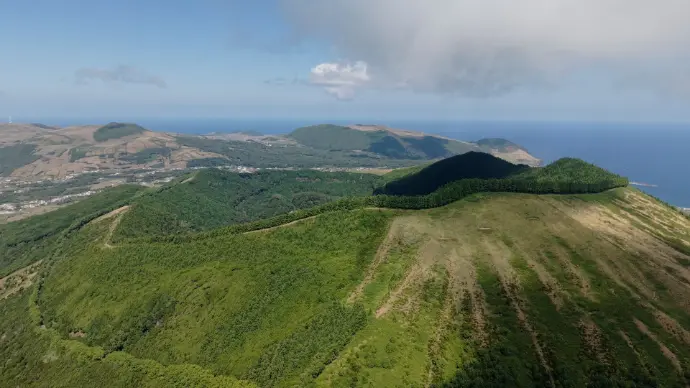
With its gentle relief and rounded profile, Graciosa stands out from the other islands of the Azores.
But this apparent tranquillity conceals a complex history, in which geology has long dictated the living conditions of the inhabitants.
The lack of high peaks limits rainfall, and the porous volcanic soils allow water to filter down to the depths.
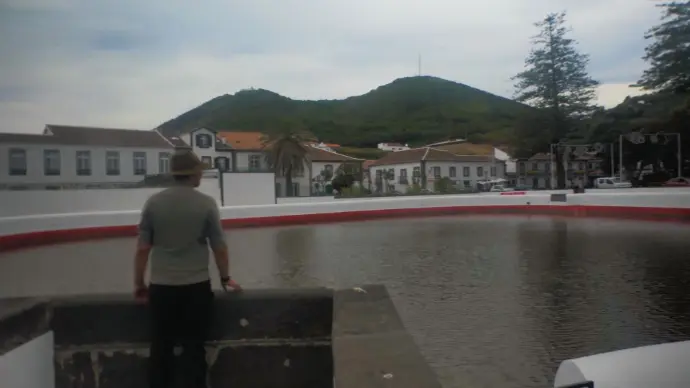
To meet this challenge, people have invented ingenious solutions: reservoirs, cisterns and underground canals that used to guarantee the water supply.
This ability to adapt can also be seen on the coast.
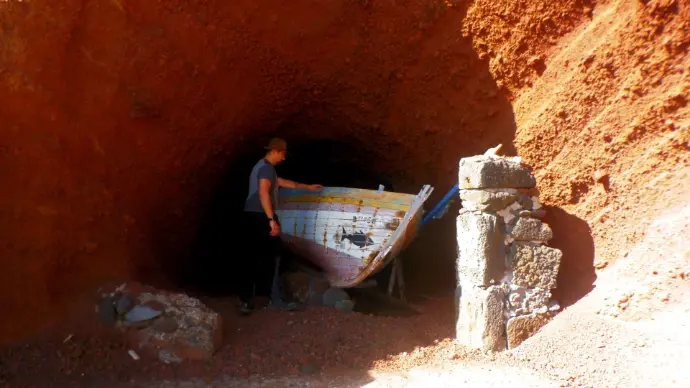
In the soft cliffs of Porto Afonso, fishermen have dug boat shelters, transforming the volcanic rock into an ally against the Atlantic storms.
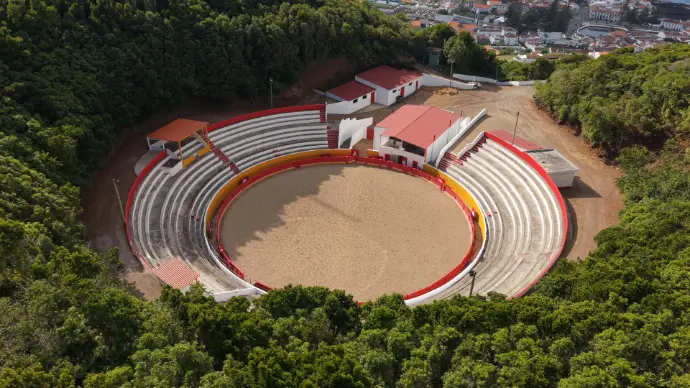
What's even more astonishing is that the local culture is rooted in a volcanic cone: a one-of-a-kind arena built right into the morphology of Pico da Ajuda.
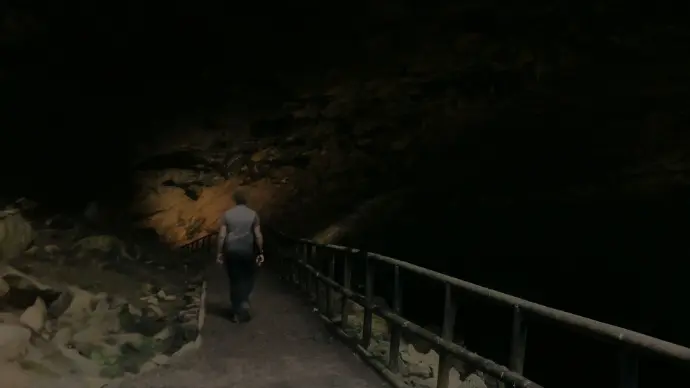
But the heart of Graciosa reveals another facet: hidden within its central caldera are caves and cavities formed by ancient lava lakes.
At these depths, the Earth is still discreetly releasing gases.
The island's mild climate should not obscure its active volcanic nature.
Graciosa, true to its name, illustrates a subtle balance between geological constraints and human ingenuity. Here, rock shapes both daily life and cultural identity, reminding us that living on a volcanic island always means dealing with the Earth.